 Atin Ito | Ontario’s First Filipino Community Newspaper – Trusted News and Stories for the Filipino-Canadian Community Atin Ito is Ontario’s first Filipino community newspaper, delivering trusted news, stories, and updates for Filipino-Canadians. Stay connected with your community.

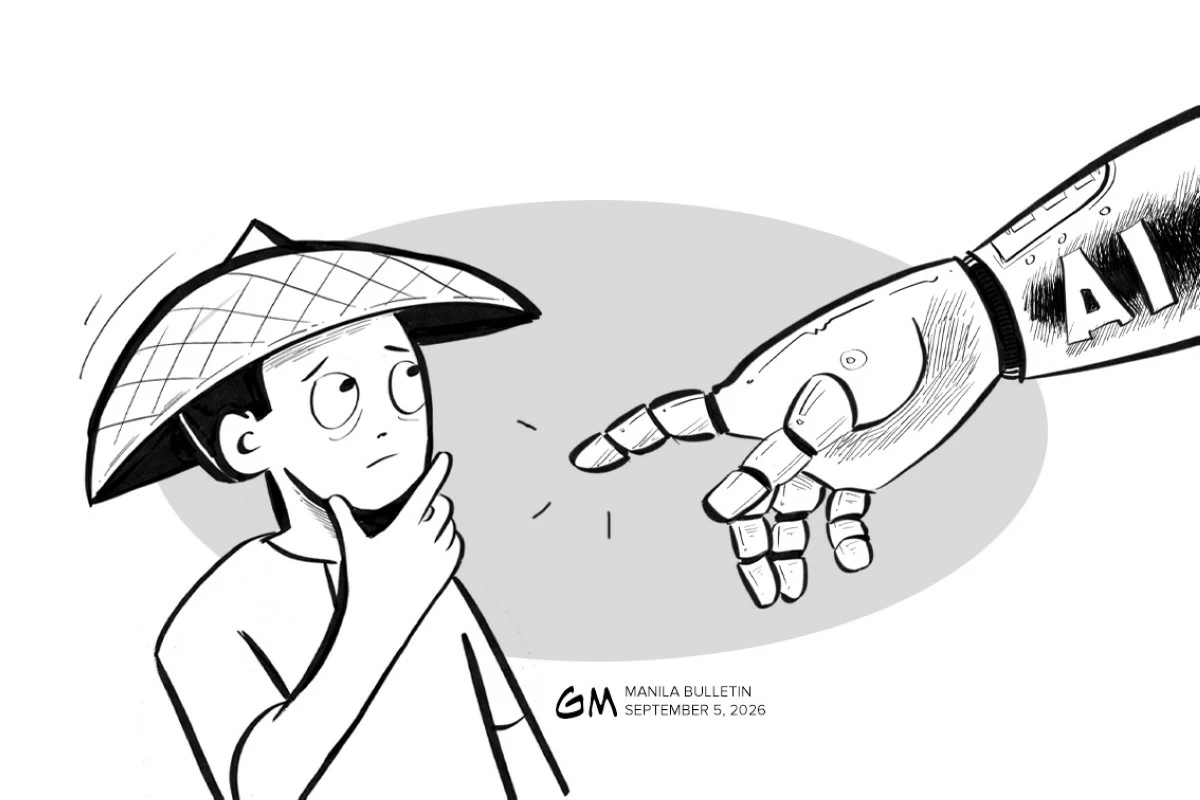 The Philippines has placed a bold bet on artificial intelligence (AI), with the planned AI industrial hub in New Clark City in Tarlac province under the United States (US)-led Pax Silica initiative envisioned as a gateway to higher-value manufacturing, semiconductor production, and the global AI supply chain.
The potential gains are substantial. State-run Bases Conversion and Development Authority (BCDA) estimates that the 1,619-hectare (ha) hub could generate as much as $200 billion in additional exports once fully developed over 30 years, alongside hundreds of thousands of direct and indirect jobs. The first phase, covering about 500 ha, is targeted to begin development in 2028.
Two recent Manila Bulletin reports suggest that much work remains to be done. The warnings are especially timely as the government moves from promoting the project’s promise toward laying the concrete foundations needed to deliver it.
Telecommunications infrastructure investment as a share of gross domestic product (GDP) even declined to 0.39 percent in 2024 from 0.64 percent in 2018.
These findings should not be viewed as arguments against Pax Silica. On the contrary, they provide the government with a practical checklist of what must be fixed if the project—and the broader Philippine AI strategy—is to succeed.
New Clark City itself is already preparing some of these requirements, including a dedicated power connection. But an AI hub cannot prosper as an isolated island of world-class infrastructure surrounded by broader national weaknesses. The benefits of Pax Silica should extend beyond Tarlac by strengthening the digital ecosystem that Filipino businesses, workers, and communities use nationwide.
Pax Silica offers the Philippines a rare opportunity to move higher in global technology value chains. But attracting investors requires more than announcing an AI hub or setting impressive targets. The country must demonstrate that the foundations beneath those ambitions are equally strong.
*****
Credit belongs to: www.mb.com.ph


