 Atin Ito | Ontario’s First Filipino Community Newspaper – Trusted News and Stories for the Filipino-Canadian Community Atin Ito is Ontario’s first Filipino community newspaper, delivering trusted news, stories, and updates for Filipino-Canadians. Stay connected with your community.

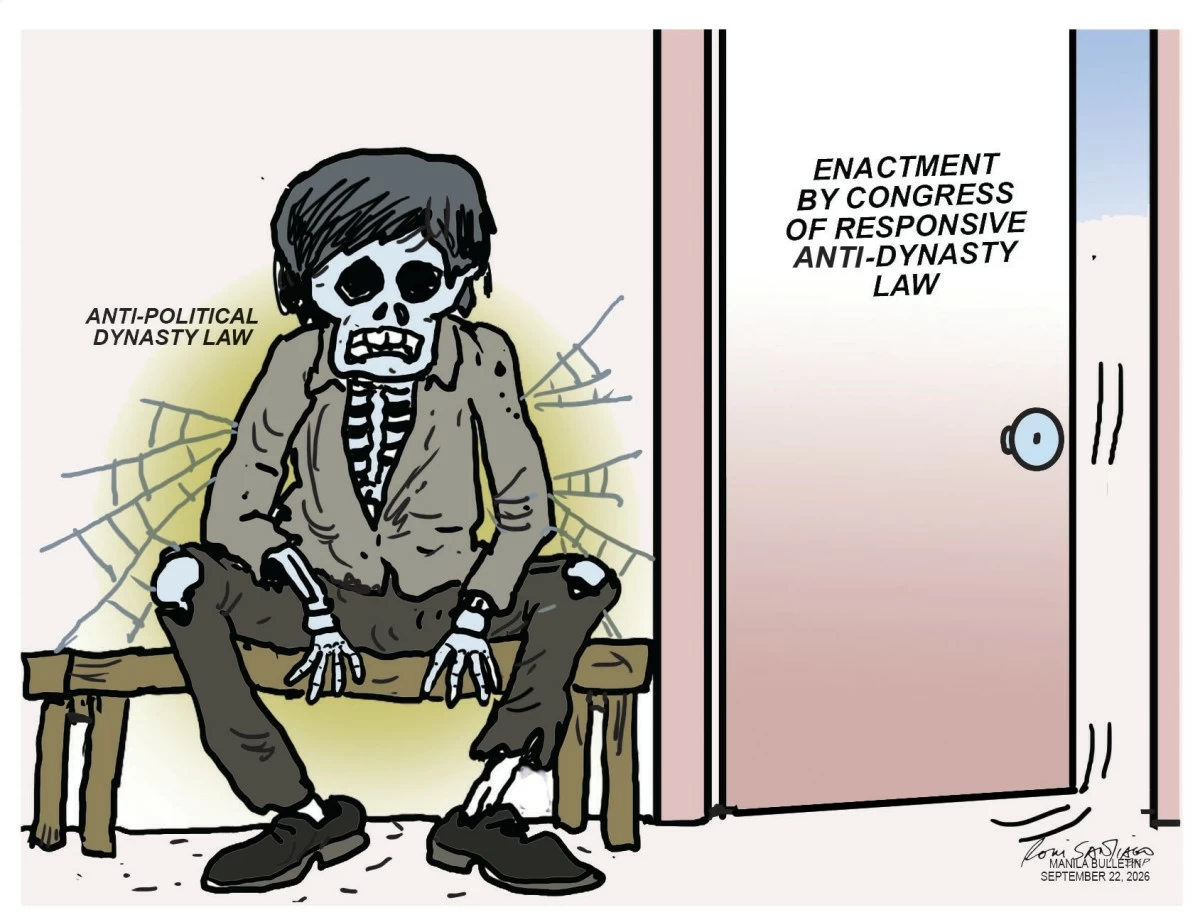 Thirty-nine years is a long time to wait for the implementation of a constitutional command. In a landmark ruling, the Supreme Court en banc has now said so with unmistakable clarity.
The High Court unanimously ruled that Congress’s failure to pass an anti-political dynasty law under Article II, Section 26 of the Constitution constitutes a grave abuse of discretion and ordered Congress to enact the legislation with utmost urgency. What stands out is glaring inaction: a lapse of 39 years since the people ratified the post-EDSA Constitution in 1987.
The constitutional provision is straightforward: “The State shall guarantee equal access to opportunities for public service, and prohibit political dynasties as may be defined by law.”
That distinction is crucial.
The Supreme Court’s ruling does not prescribe the precise contents of the legislation. That remains the responsibility of Congress. But the Court has made clear that Congress can no longer treat the constitutional mandate as an aspiration that may be deferred indefinitely.
The issue goes beyond individual families. It concerns the breadth of participation in democratic government.
An effective anti-dynasty law, therefore, need not be understood as an attack on families or on the right of any citizen to seek public office. Its constitutional purpose is to widen access to public service and prevent excessive concentration of elective power.
There is reason for urgency. The House of Representatives has already approved its version of an Anti-Political Dynasty Act, while the Senate is considering its own measure. The two chambers will ultimately have to reconcile their differences.
This creates a rare convergence of constitutional direction, judicial action and executive support. Congress should seize the opportunity and give meaningful effect to a constitutional promise that Filipinos have awaited since 1987: equal access to opportunities for public service.
*****
Credit belongs to: www.mb.com.ph


