 Atin Ito | Ontario’s First Filipino Community Newspaper – Trusted News and Stories for the Filipino-Canadian Community Atin Ito is Ontario’s first Filipino community newspaper, delivering trusted news, stories, and updates for Filipino-Canadians. Stay connected with your community.

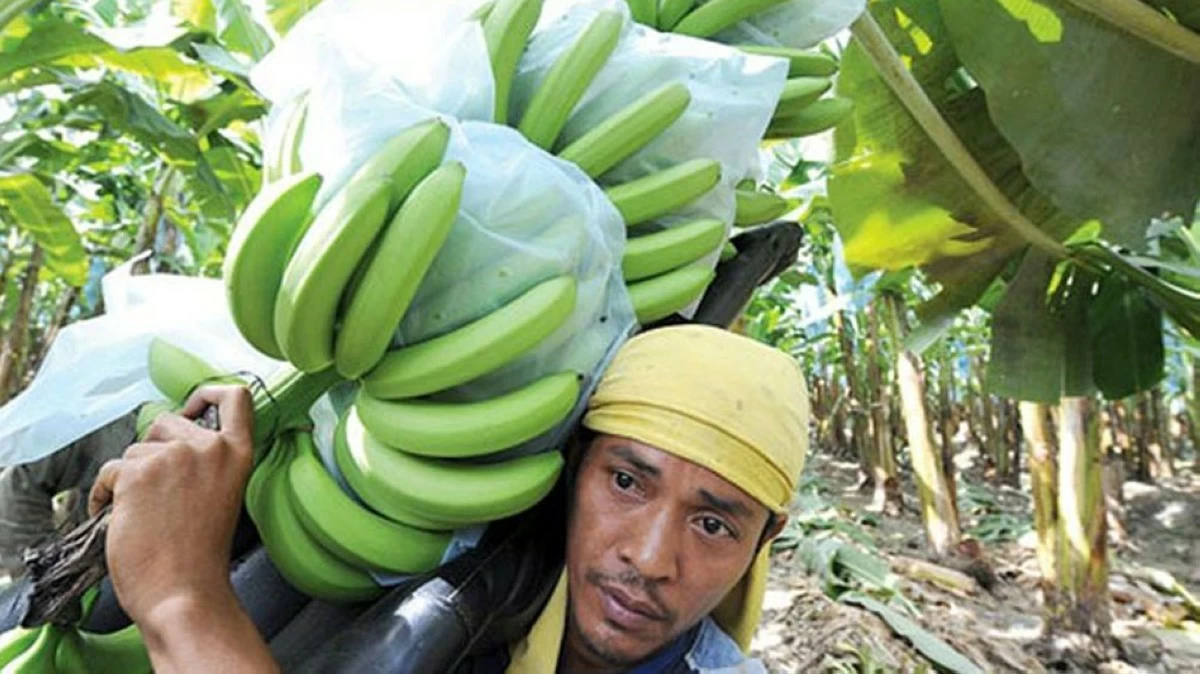 The Philippines is willing to slash tariffs on Japanese car imports in exchange for zero duties on its banana shipments to Tokyo, a strategy Manila expects could pave the way for the country to become the world’s top exporter of the fruit.
Trade Secretary Cristina Roque told reporters that the government is aggressively pushing to eliminate tariffs on Philippine bananas under its free trade agreement (FTA) with Japan.
Roque noted that negotiations to update the Philippines-Japan Economic Partnership Agreement (PJEPA) are ongoing, with Tokyo potentially open to the amendment.
Filipino banana exports to Japan currently face an eight-percent duty from October to March, which spikes to 18 percent between April and September.
But while the Philippines still dominates the market, demand has waned in recent years as competitors with significantly lower tariffs edge in.
Roque emphasized that eliminating these trade barriers would not only protect Manila’s market share in Japan, but also cement its place as the top global supplier.
The Philippines reclaimed its spot as the world’s second-largest banana exporter after shipping out 2.93 million metric tons (MT) last year, according to the UN Food and Agriculture Organization (FAO).
The DTI credited the country’s economic momentum to key trade deals like the Regional Comprehensive Economic Partnership (RCEP) and the PH-South Korea FTA. By eliminating or lowering import duties, these pacts gave local producers a distinct price advantage over international rivals.
According to the FAO, Ecuador remains the undisputed global leader, exporting 6.42 million MT last year.
Enacted in 2008, PJEPA was the Philippines’ first bilateral FTA, designed to slash tariffs, spur bilateral commerce, and drive mutual investment. — Dexter Barro II
*****
Credit belongs to: www.mb.com.ph


