 Atin Ito | Ontario’s First Filipino Community Newspaper – Trusted News and Stories for the Filipino-Canadian Community Atin Ito is Ontario’s first Filipino community newspaper, delivering trusted news, stories, and updates for Filipino-Canadians. Stay connected with your community.

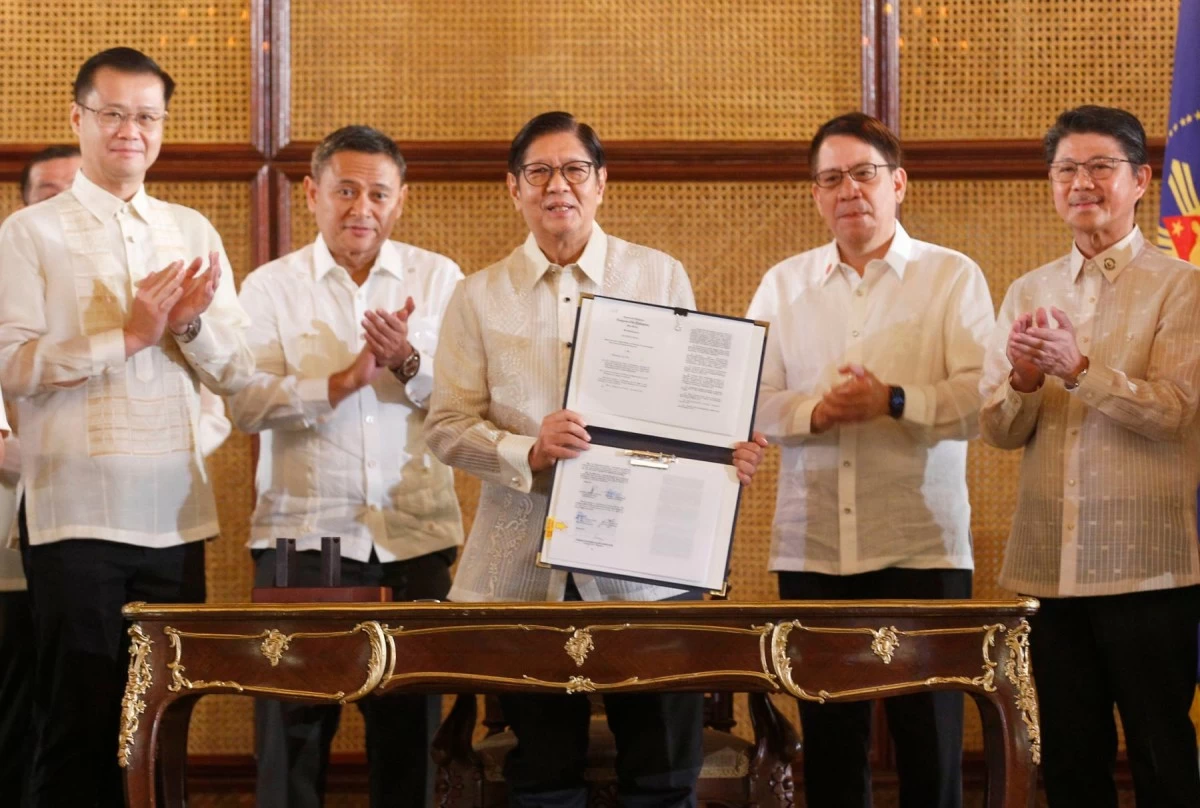 President Ferdinand ‘Bongbong’ Marcos Jr. signs the amendments to the Universal Access to Quality Tertiary Education Act during a ceremonial signing at the Ceremonial Hall of Malacañan Palace in Manila on Sept 4, 2026. The enhanced law expands financial assistance for disadvantaged learners and strengthens the implementation and monitoring of the Unified Student Financial Assistance System for Tertiary Education (UniFAST) program. It also broadens the Tertiary Education Subsidy (TES) to cover internship subsidies, professional licensure costs, and allowances for students with disabilities. Also in attendance are Senate President Sherwin Gatchalian, House Speaker Faustino Dy III, Education Secretary Sonny Angara, Pasig Rep. Roman Romulo, and other officials. (Mark Balmores)
President Marcos has signed amendments to the Universal Access to Quality Tertiary Education Act (UAQTEA), expanding government assistance to poor and disadvantaged students pursuing college or technical-vocational education and training (TVET).
The amendments seek to ensure that government assistance reaches students from poor and disadvantaged families, including qualified beneficiaries of the Pantawid Pamilyang Pilipino Program (4Ps).
Poor and deserving students taking priority programs who are not covered by existing grants may also receive government support to study in qualified private higher education and technical-vocational institutions, according to President Marcos.
“This expands the opportunities for more Filipinos to earn a degree, a diploma, or skills qualification,” Marcos said during the ceremonial signing at Malacañan on Friday, Sept. 4.
The President said free tuition had removed a major barrier to tertiary education, but families continued to face expenses for books, transportation, daily needs, and other requirements that could prevent students and trainees from completing their studies.
“We must help all our learners remain in school or training until they complete their studies and acquire the skills that they need to succeed,” Marcos said.
The original law provides free tuition and other school fees in public higher education and state-run technical-vocational institutions, while offering assistance to learners with limited financial means through the Tertiary Education Subsidy.
Marcos said the amendments would take that support further by strengthening assistance for those most in need.
The new law also seeks to improve the monitoring and accountability mechanisms of the Unified Student Financial Assistance System for Tertiary Education (UniFAST) Program, according to data provided for the signing.
Marcos said the number of Free Higher Education beneficiaries had increased from 2 million to 2.6 million students in the first semester of the current academic year.
He also cited the launch in January of the Bagong Pilipinas Merit Scholarship Program for outstanding Senior High School graduates pursuing priority degree programs in higher education or priority TVET diploma programs.
The President said the number of DOST-Science Education Institute undergraduate scholars also increased from 45,024 in School Year 2022-2023 to 48,520 in School Year 2025-2026.
“Now, the implementation falls on the Executive,” Marcos said, directing the Commission on Higher Education (CHED), Technical Education and Skills Development Authority (TESDA), UniFAST, and other concerned agencies to complete the implementing rules and regulations within the period required by law and ensure its smooth implementation.
— Argyll Cyrus Geducos
*****
Credit belongs to: www.mb.com.ph


