 Atin Ito | Ontario’s First Filipino Community Newspaper – Trusted News and Stories for the Filipino-Canadian Community Atin Ito is Ontario’s first Filipino community newspaper, delivering trusted news, stories, and updates for Filipino-Canadians. Stay connected with your community.

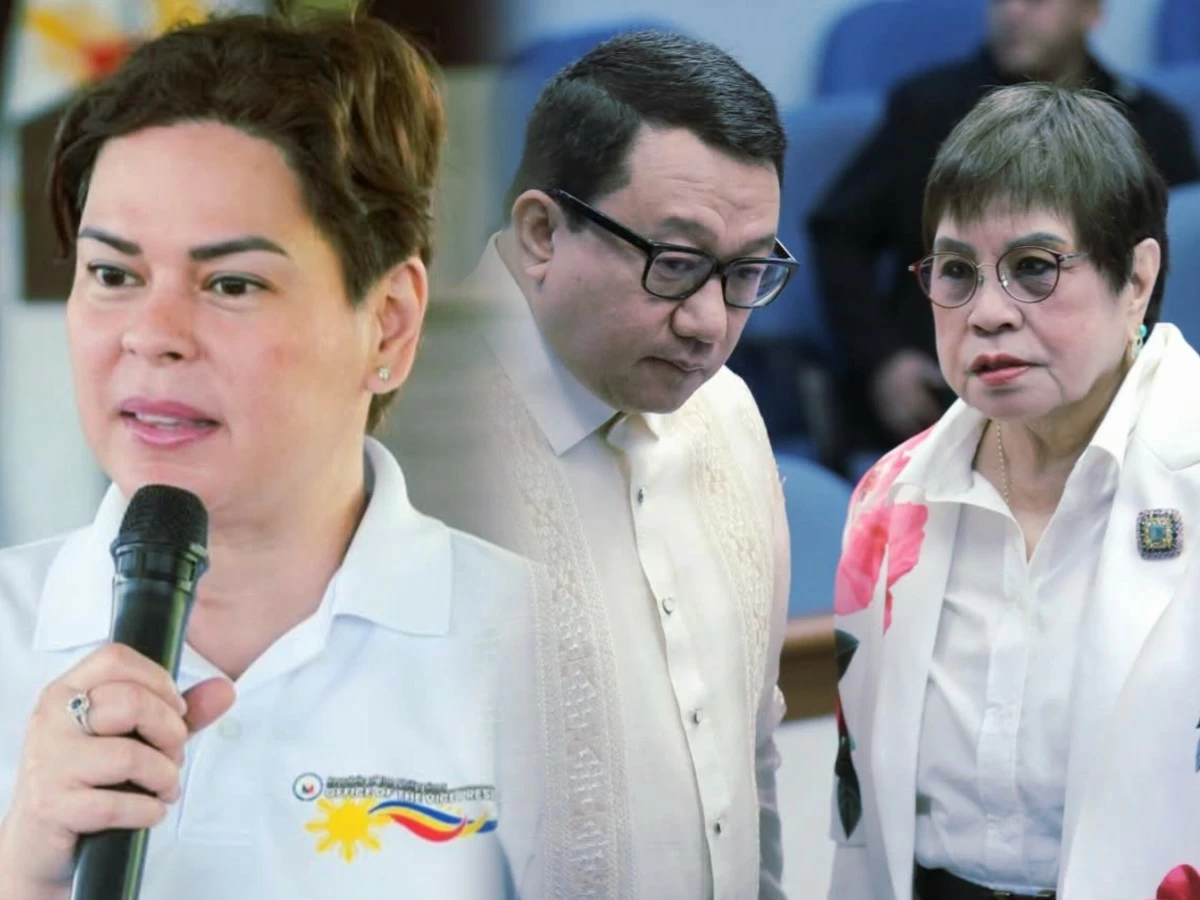 From left: Vice President Sara Duterte, Manila 3rd district Rep. Joel Chua, lawyer Lorna Kapunan (Facebook)
The House prosecution panel’s much-talked about decision to “sacrifice” three of the four articles of impeachment against Vice President Sara Duterte and stake its entire case on a single charge was no spur-of-the-moment chess move.
Chua said that withdrawing impeachment articles had been among several possible courses of action considered from the outset, depending on how the evidence and witnesses performed before the Senate impeachment court.
Chua said he had previously raised the possibility of dropping witnesses or even entire articles if prosecutors became convinced that the evidence already presented was sufficient to gain Duterte’s conviction.
On Tuesday, Oct. 13, the prosecution withdrew articles I, III and IV (confidential funds misuse, bribery, grave threats and inciting to sedition, respectively), leaving article II–which accused Duterte of unexplained wealth–as the sole charge she must answer before the senator-judges.
“So minsan nagbabawas kayo o nagdadagdag ng testigo, depende kung papaano nailalatag yung mga ebidensya (Sometimes you reduce or add witnesses, depending on how the evidence is laid out),” he said.
While the possibility of narrowing the case had long been discussed, Chua clarified that the final decision was settled only after prosecutors completed their latest assessment.
Meanwhile, private prosecutor, lawyer Lorna Kapunan disclosed that feedback from the prosecution’s focus groups also factored into the decision, with viewers reportedly growing weary of the volume of financial documents and the highly technical exchanges during the months-long proceedings.
Article II required prosecutors to present financial records from banks, the Anti-Money Laundering Council (AMLC), the Bureau of Internal Revenue (BIR), insurance companies and corporations.
“They’re tired of listening pointlessly to cross-examination questions that seem not to controvert the facts and the documents that we present,” she said.
The prosecution has also cited the Senate’s legislative workload and what it considers the strength of the unexplained wealth charge as reasons for abandoning the other articles.
*****
Credit belongs to: www.mb.com.ph


