 Atin Ito | Ontario’s First Filipino Community Newspaper – Trusted News and Stories for the Filipino-Canadian Community Atin Ito is Ontario’s first Filipino community newspaper, delivering trusted news, stories, and updates for Filipino-Canadians. Stay connected with your community.

This fishing town on the western tip of Flores Island in Indonesia serves as a gateway to dragons, underwater wonders, and blazing sunsets
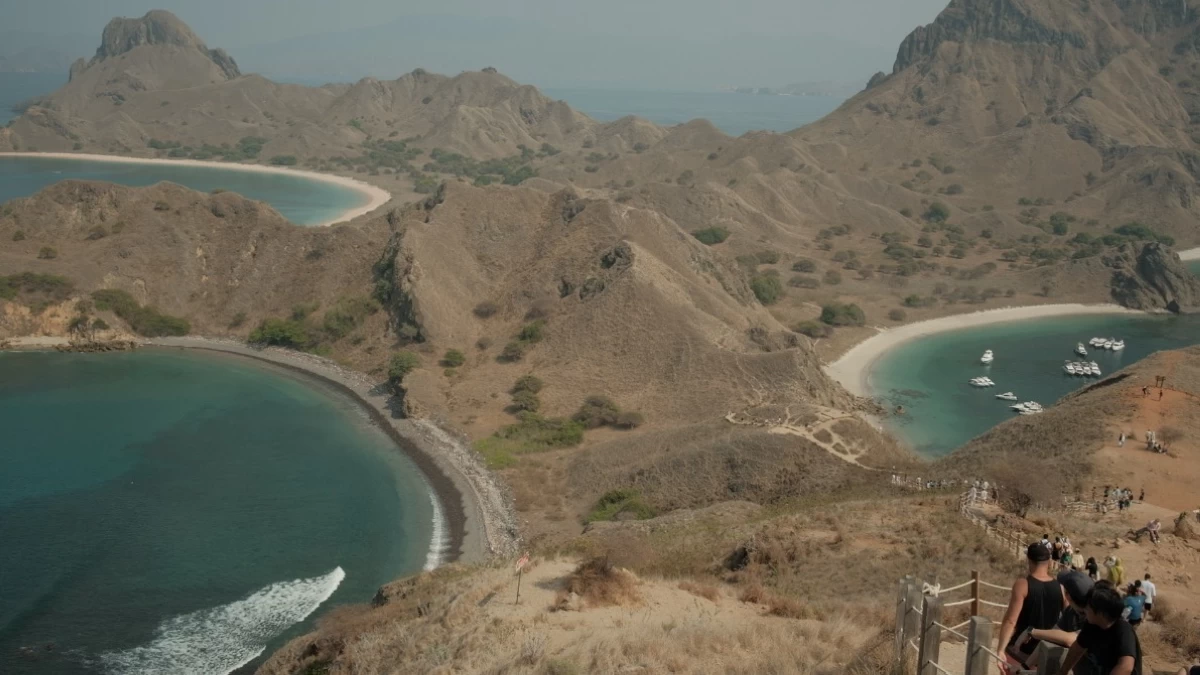 Padar Island (Photo: Akmal Hidayat/Indonesian Embassy in Manila)
While Labuan Bajo offers a tranquil backdrop for those who simply want to lounge and take things slow, exploring its many of its surrounding gems feels more like the latter, with each island, hidden cave, and breathtaking landscape offering more reasons to venture further.
Last October, we traveled to Labuan Bajo with our friends from the Indonesian Embassy in Manila. After making our way to Bali and waiting more than seven hours for our connecting flight to Flores Island, we finally arrived at our destination, ready to discover what lay beyond the gateway.
Our quest begins at Komodo National Park. A UNESCO World Heritage Site since 1991, the park’s scope includes a protected group of islands and surrounding marine waters in East Nusa Tenggara. Getting to its sites requires sailing for an hour or so from Labuan Bajo Harbor.
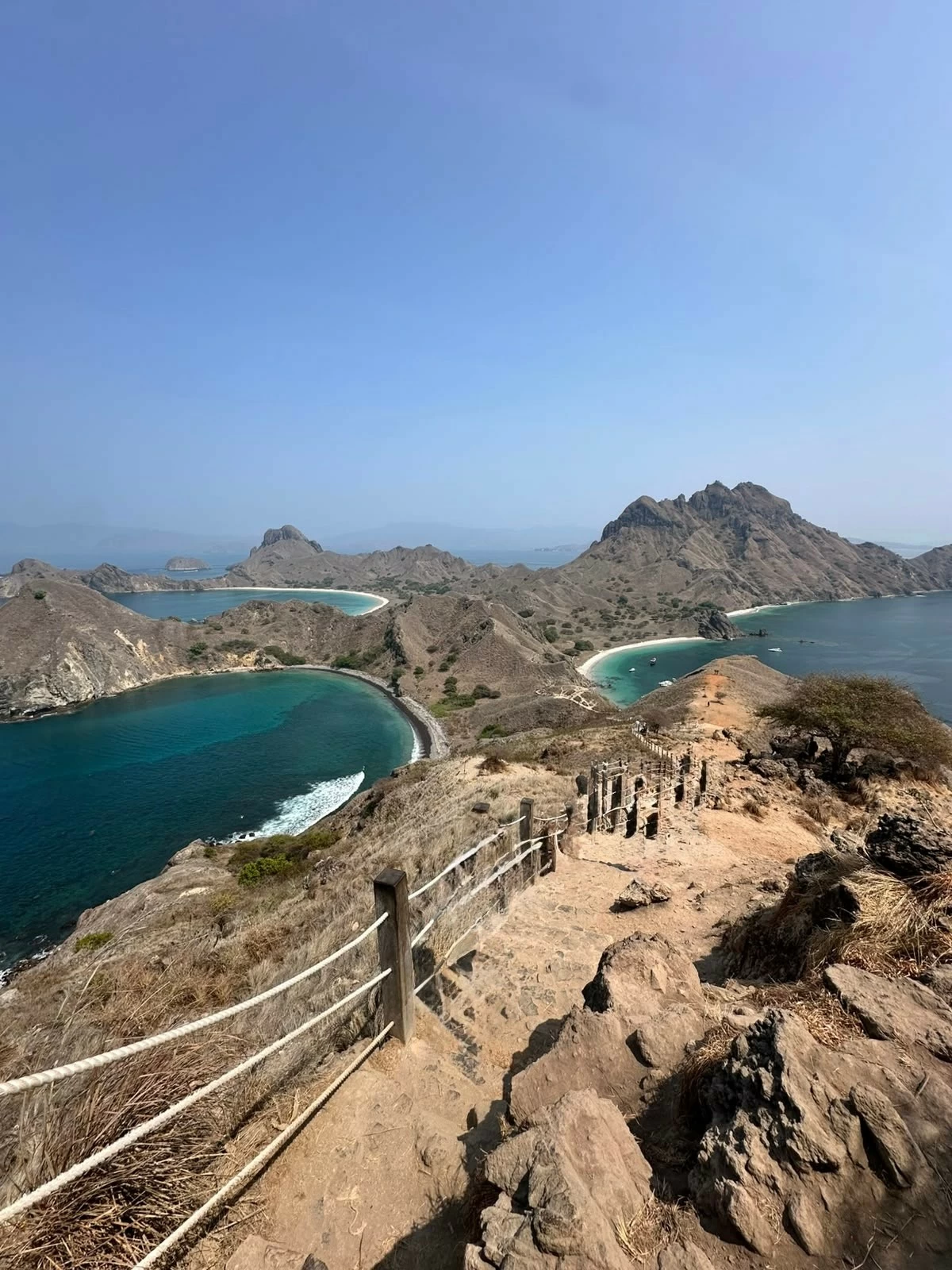 It takes approximately 800 steps just to get to the peak of Padar Island. (Photo: Akmal Hidayat/Indonesian Embassy in Manila)
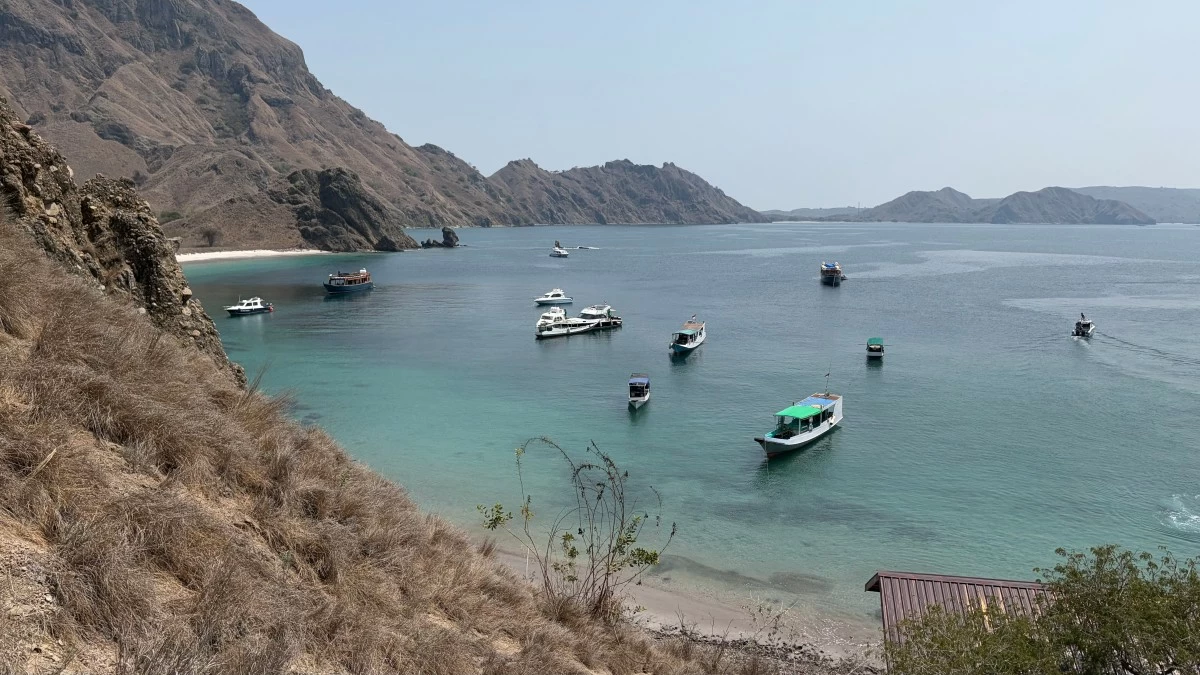 The coast of Padar Island (Photo: Akmal Hidayat/Indonesian Embassy in Manila)
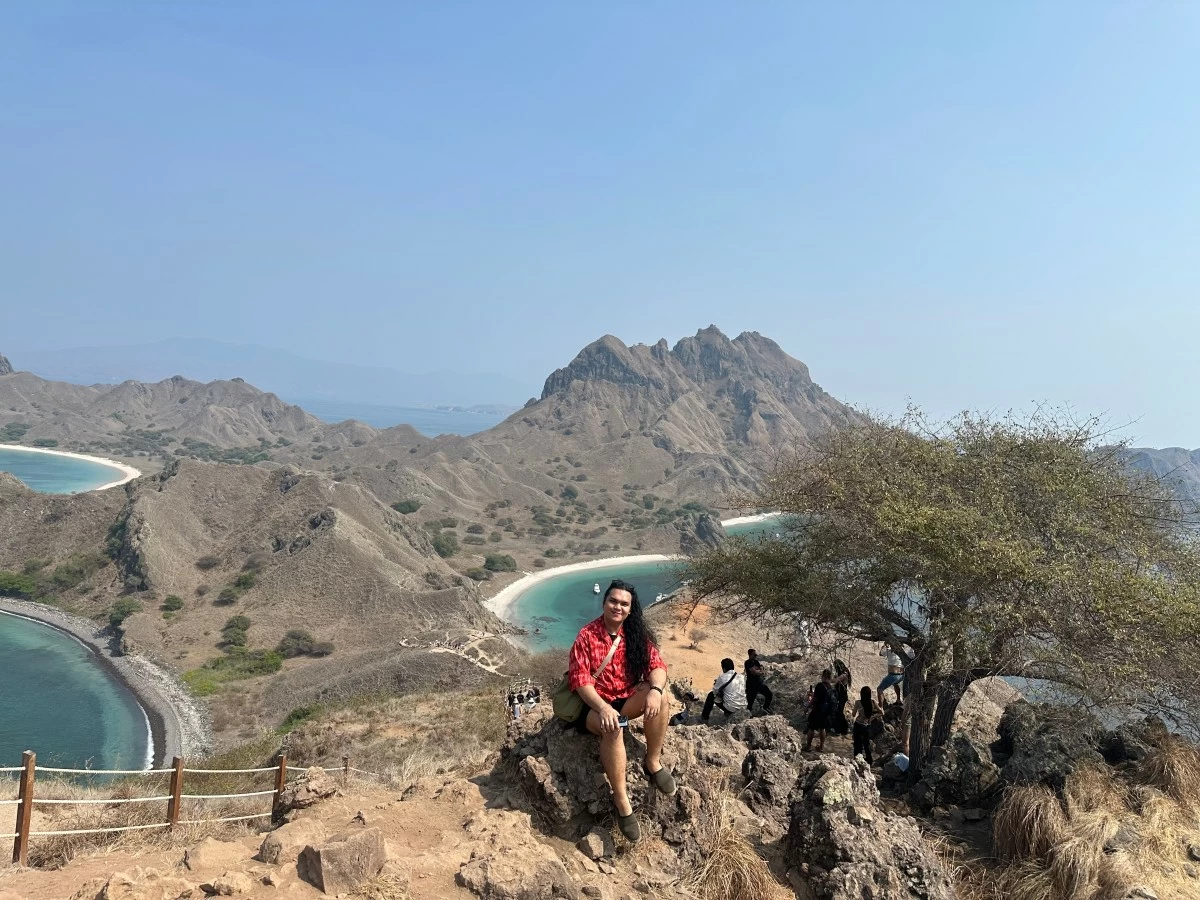 Here’s the best spot to take photo, where you can capture the island’s three beaches. (Photo: John Legaspi/Manila Bulletin)
Our first stop is Padar Island. Defined as a photographer’s dream, the island is the best place to soak in panoramic views of turquoise waters, dramatic hills, and winding ridgelines. But to see all those views, one must hike up approximately 840 steps. As daunting as it may seem, hiking on the island can be an invigorating experience. You are greeted with the best views at each of the six stops heading to the peak.
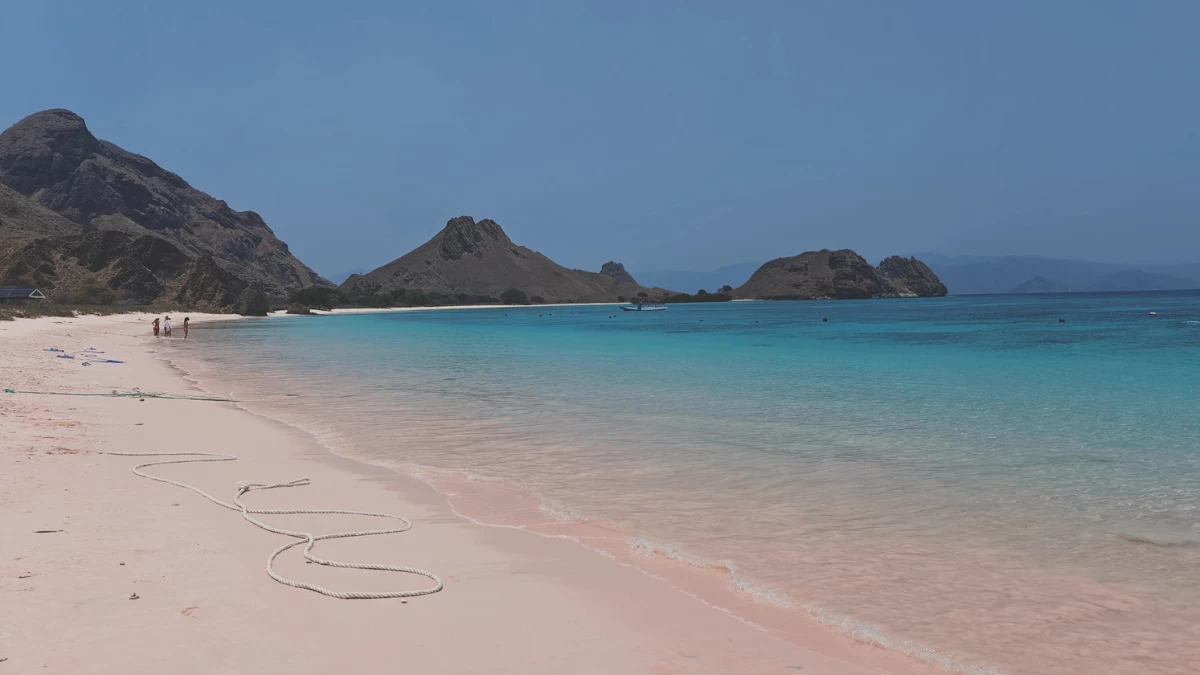 Pink Beach or locally known as Pantai Merah (Photo: John Legaspi/Manila Bulletin)
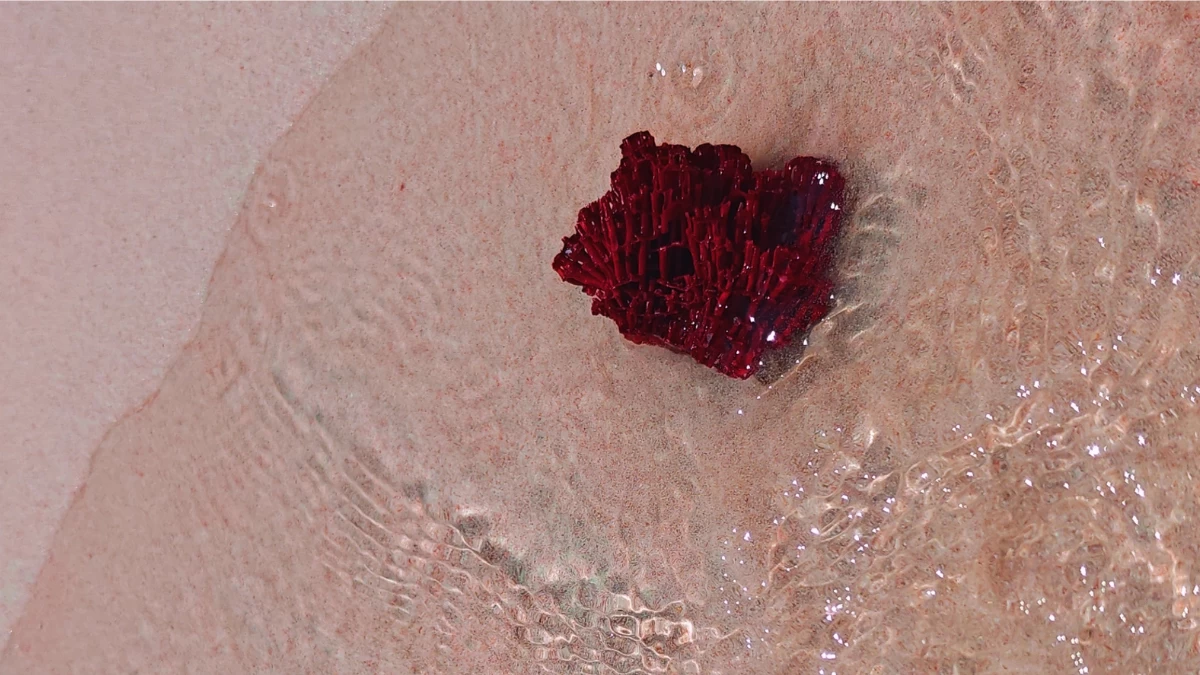 Microscopic bit of this red coral cause the beach to have a pinkish hue. (Photo: John Legaspi/Manila Bulletin)
Next is Pink Beach. Locally known as Pantai Merah, the beach, as its name suggests, has a pinkish hue that contrasts with the blue of the waters that surround it. That rosy hue is caused by fragments of red coral.
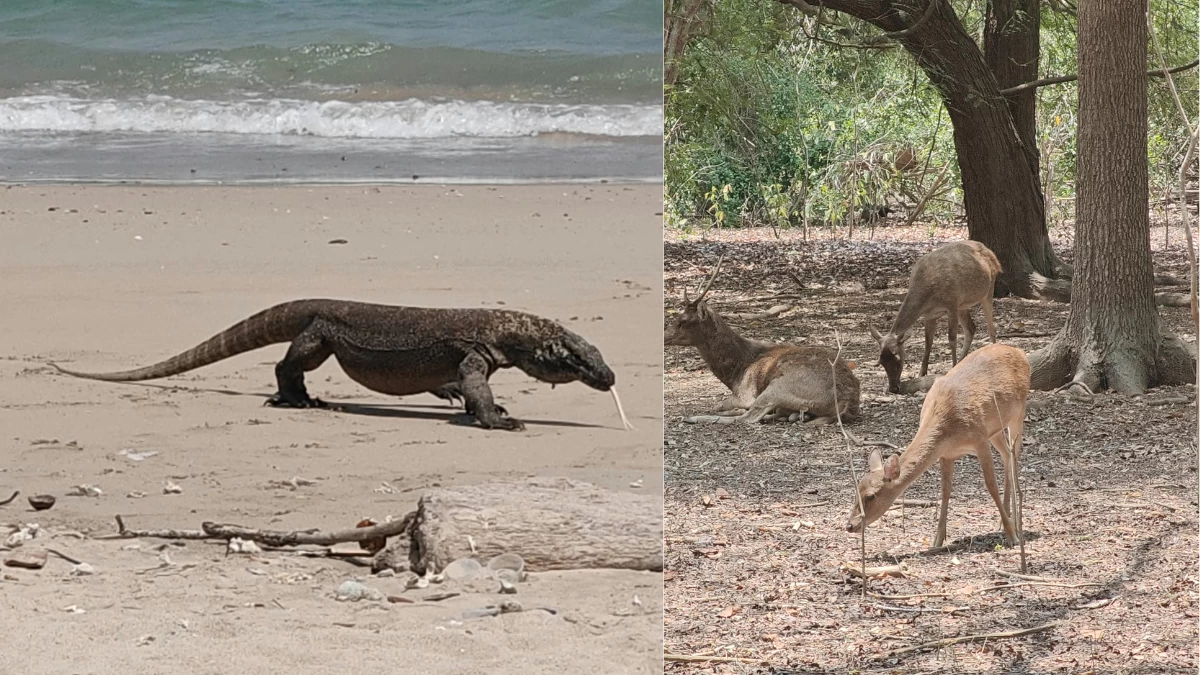 Komodo dragon and Timor deer (Photos: John Legaspi/Manila Bulletin)
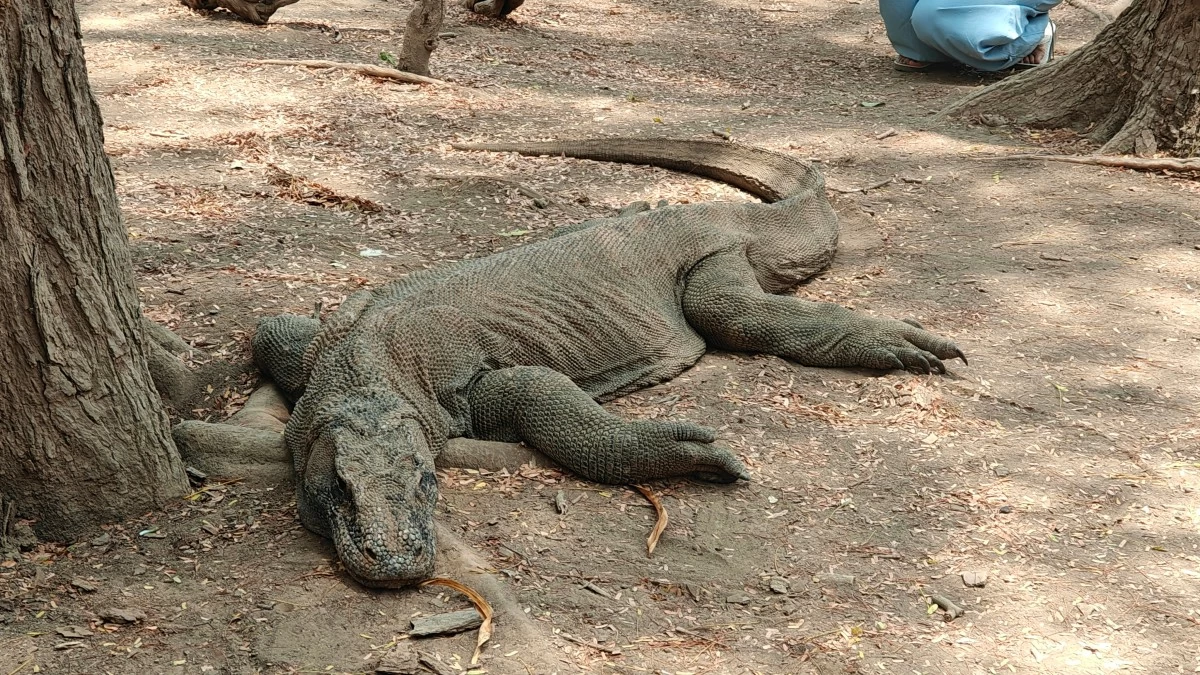 Komodo dragon at Loh Liang (Photo: Akmal Hidayat/Indonesian Embassy in Manila)
For the dreamy beach, we now head to Loh Liang on Komodo Island. This is one of the spots I’m excited to explore. While there are no fire-breathing dragons to see on the island, it is home to the world’s largest living lizard.
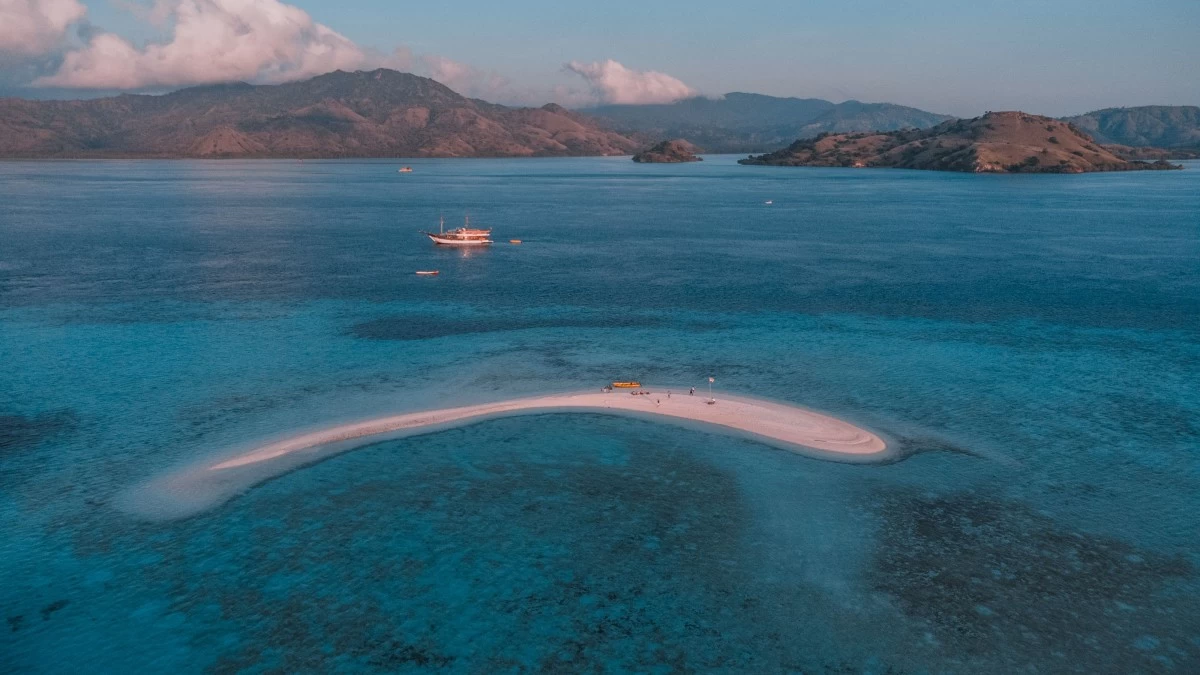 Taka Makassar (Photo: El Jusuf/Pexels)
Quests are often filled with spots that offer a sense of rarity. Take, for example, Taka Makassar, a crescent-shaped sandbar that appears when the tide is low. It is a pretty simple spot, but abundant with views of the vast seas. Its sands are tinted with the same pink hue, but more subtly.
But as we explore these vast waters, we’re reminded that nature has its own rules, and swimming alongside the ocean’s majestic creatures is never guaranteed. For now, the vibrant coral gardens beneath the surface offer more than enough wonder to make our quest through the park worthwhile.
Every quest is made memorable not only by the places we discover but also by the people we meet along the way. At Melo Traditional Village, in West Manggarai Regency of the province, we met an old, wise man. Yoseph Ugis is a cultural advocate and traditional leader in the village who gave us a glimpse of the heritage of the Manggarai people of Flores Island.
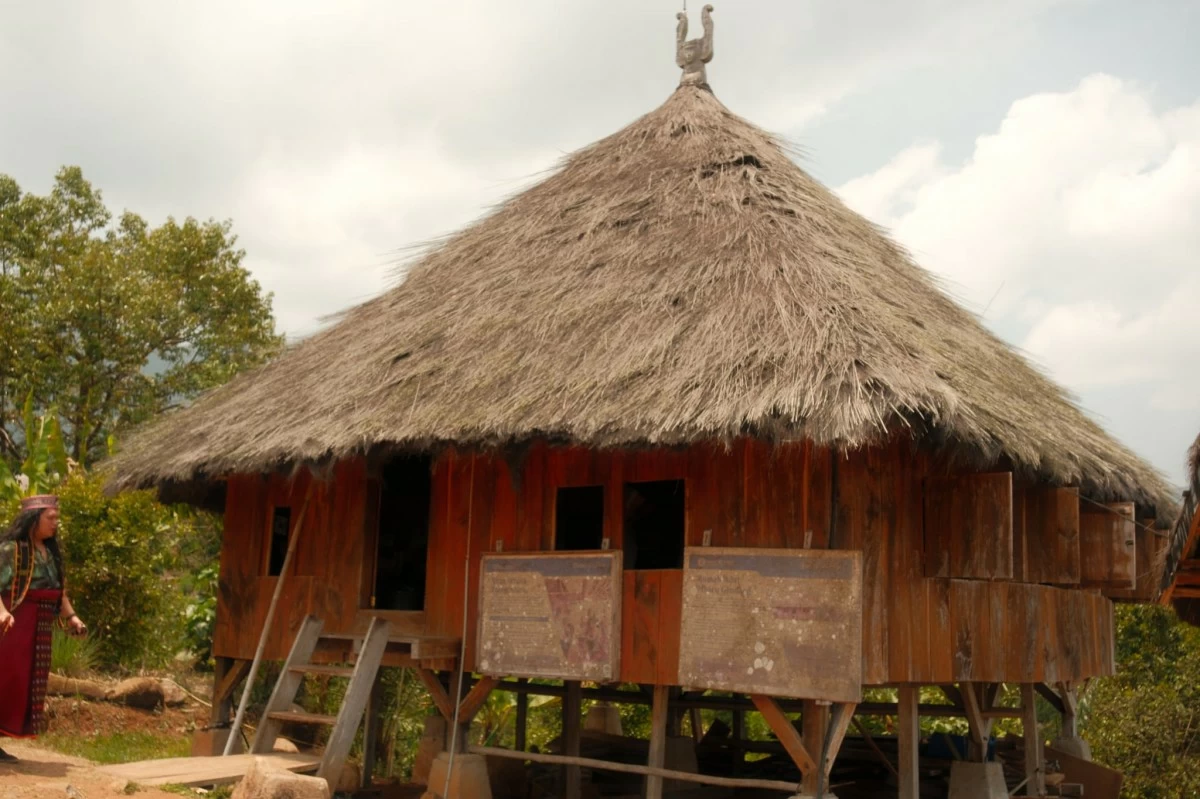 Melo Traditional Village (Photo: Akmal Hidayat/Indonesian Embassy in Manila)
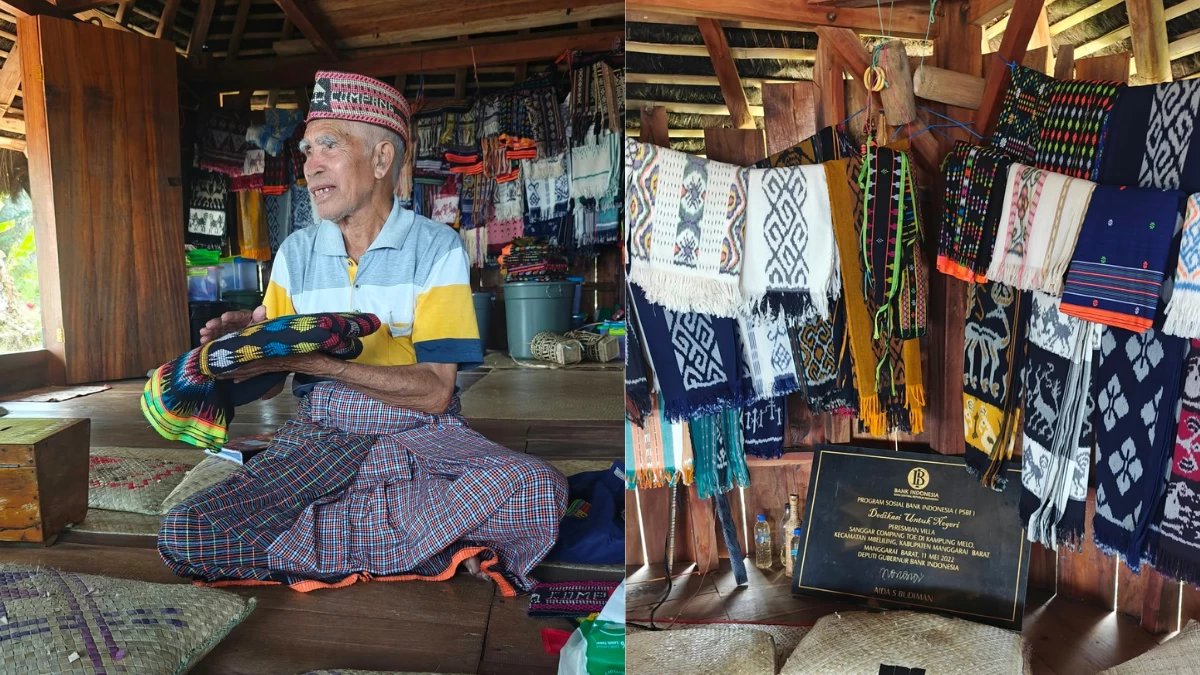 Yoseph Ugis and some of the village’s artisanal crafts (Photos: Manila Bulletin)
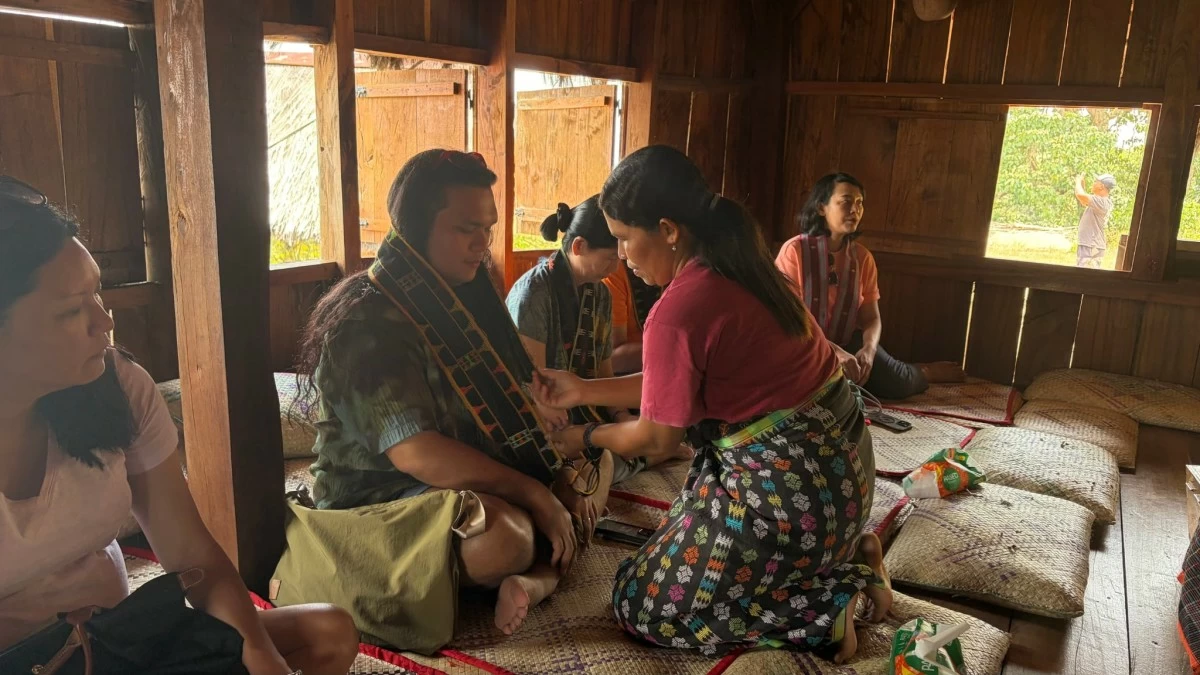 It is part of the Manggarai people’s custom to welcome guests with a handwoven selendang (scarf). (Photo: Akmal Hidayat/Indonesian Embassy in Manila)
To get the full experience, the villagers helped dress us in their traditional attire, featuring songket weaves. These weaves are also perfect keepsakes that you can buy from the community, along with handicrafts like baskets and local produce, from coffee and vanilla to cinnamon.
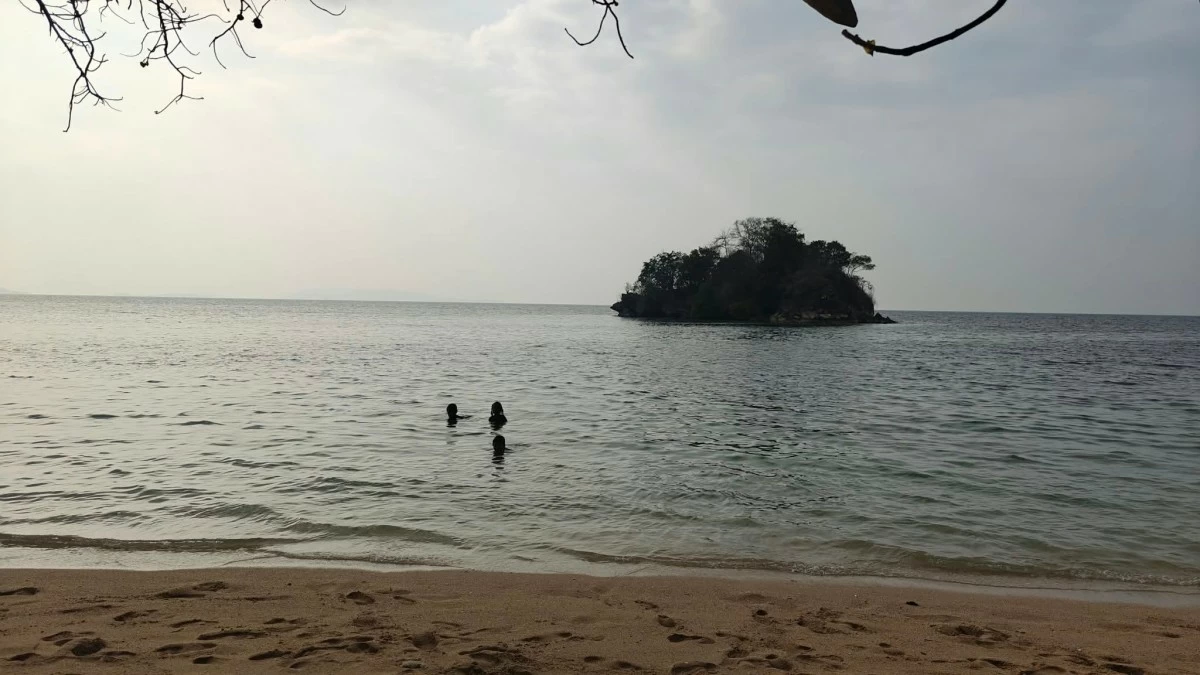 Our tiny tour guides enjoying an afternoon at the beach. (Photo: John Legaspi/Manila Bulletin)
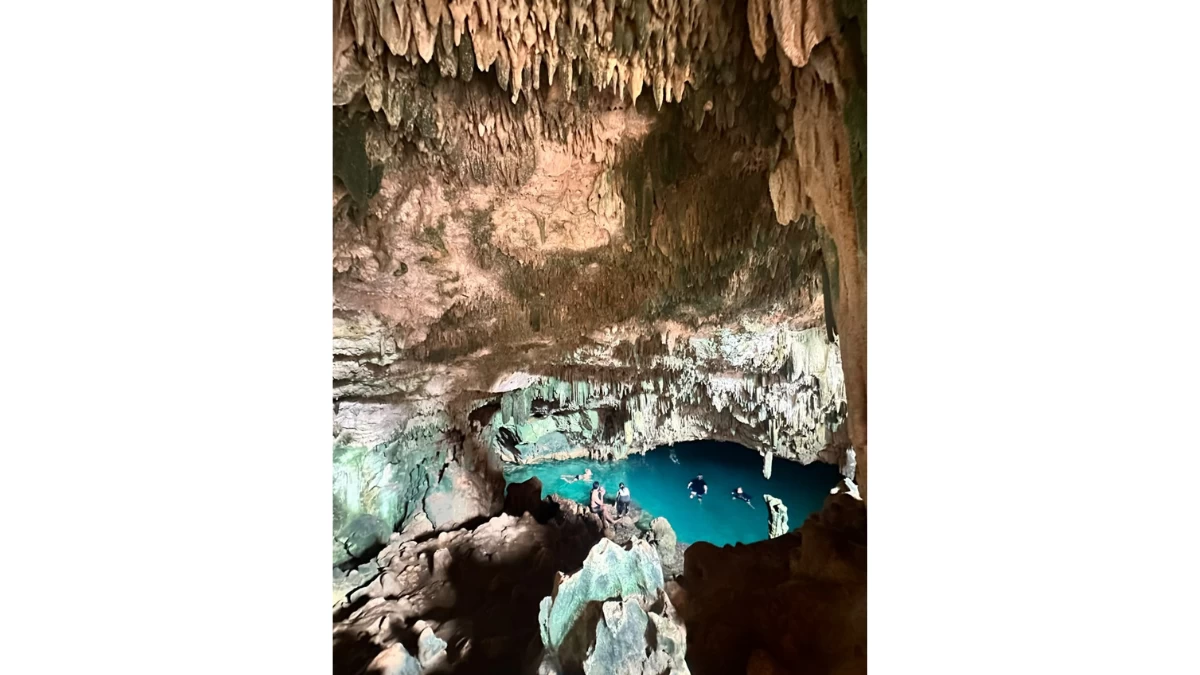 Inside Rangko Cave (Photo: Akmal Hidayat/Indonesian Embassy in Manila)
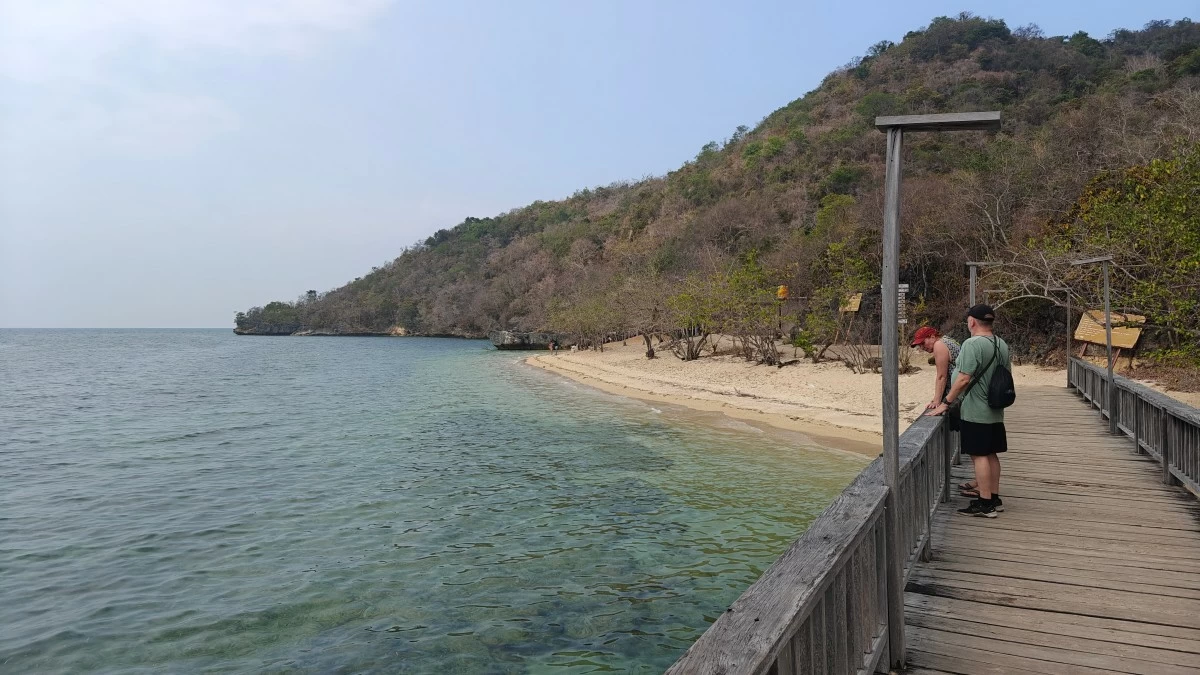 The beach near Rangko Cave (Photo: John Legaspi/Manila Bulletin)
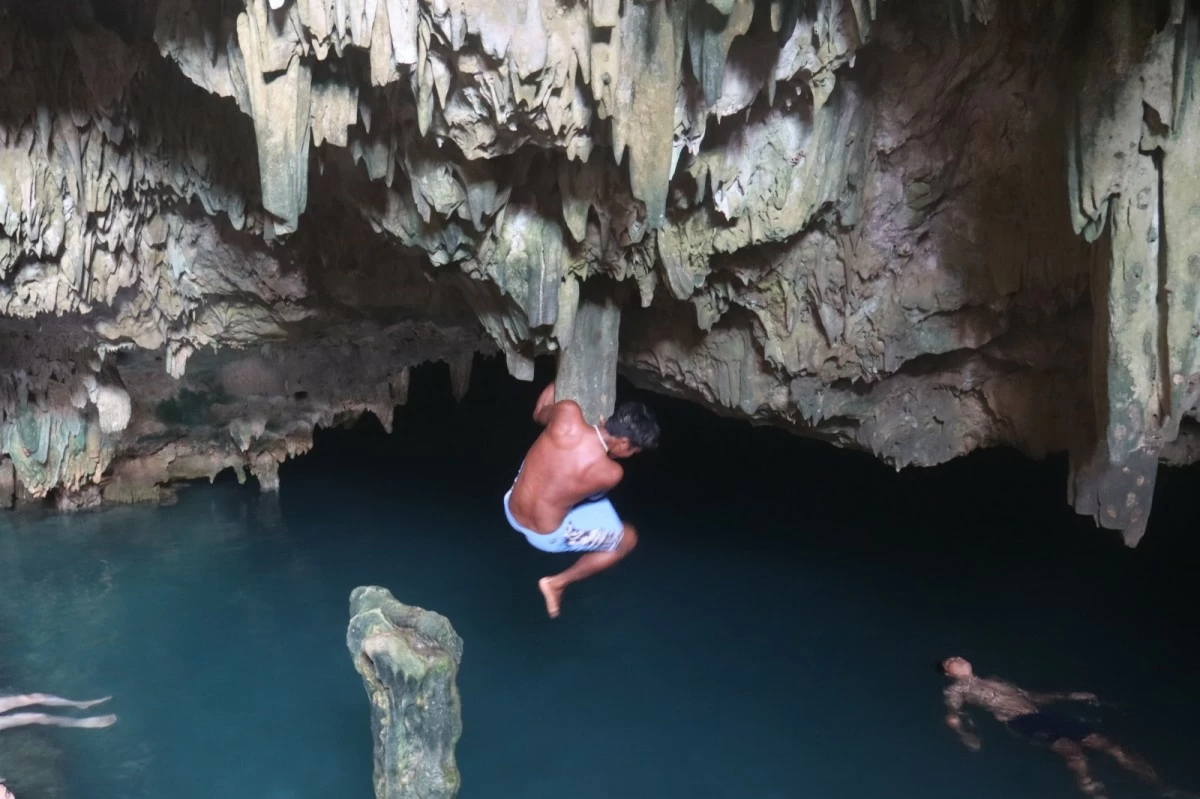 Inside Rangko Cave (Photo: Akmal Hidayat/Indonesian Embassy in Manila)
Rangko Cave feels like another world. While Komodo National Park took us out into the open sea and under the blazing sun, and Melo Traditional Village offered a more cultural landscape, here, we found ourselves immersed in the island’s hidden wonders.
Nearby, a quiet stretch of beach offers another way to take in the coast. I could have stayed there forever, sitting on fallen trees, chatting with the girls we met along the way, and simply enjoying the beach almost entirely to ourselves on a golden afternoon.
If there is one thing Labuan Bajo has in abundance, it is spots to watch the sunset. Restaurants feature view decks where diners can enjoy a meal while watching the sky transform into a canvas of warm oranges, pinks, and purples.
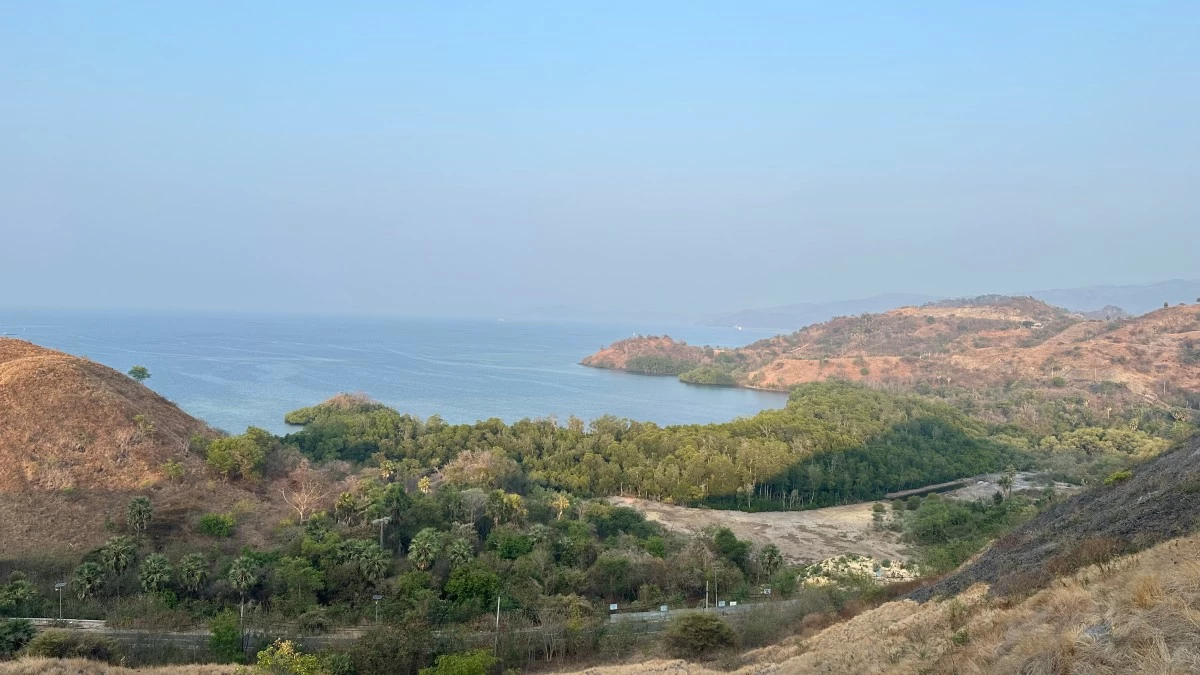 A view of Labuan Bajo from the top of Sylvia Hill (Photo: Akmal Hidayat/Indonesian Embassy in Manila)
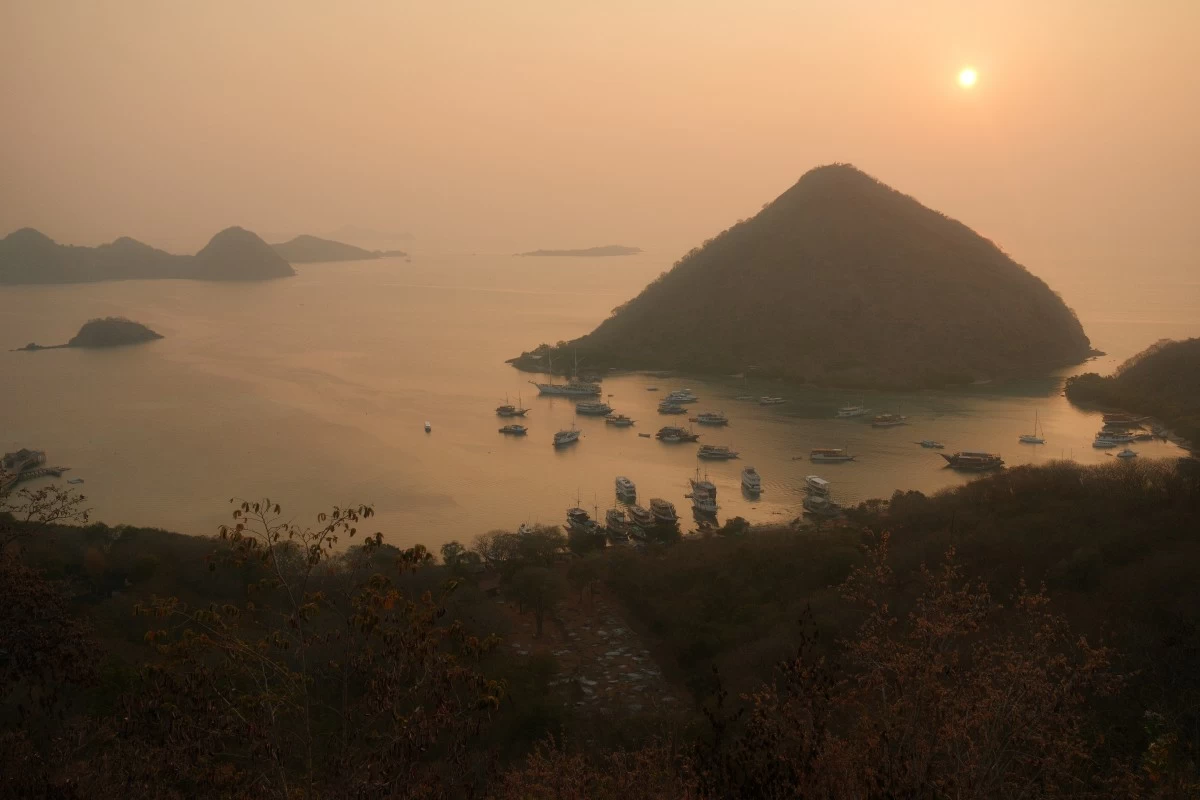 Sunset view at Sylvia Hill (Photo: Akmal Hidayat/Indonesian Embassy in Manila)
For locals, the place to be is Sylvia Hill. Unlike our previous stops, this hilltop viewpoint has more rugged terrain, requiring balance and sure footing as you make your way up the steep incline. But the reward is well worth the effort.
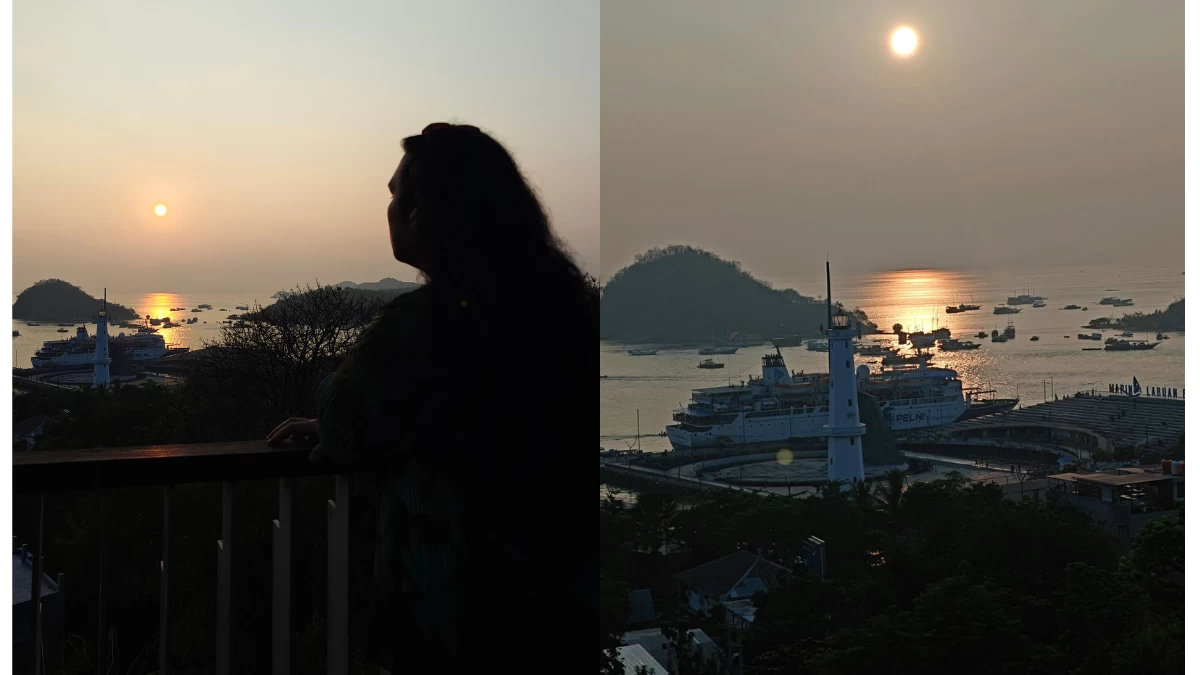 Sunset view at Photo Spot Labuan Bajo (Photos: John Legaspi/Manila Bulletin)
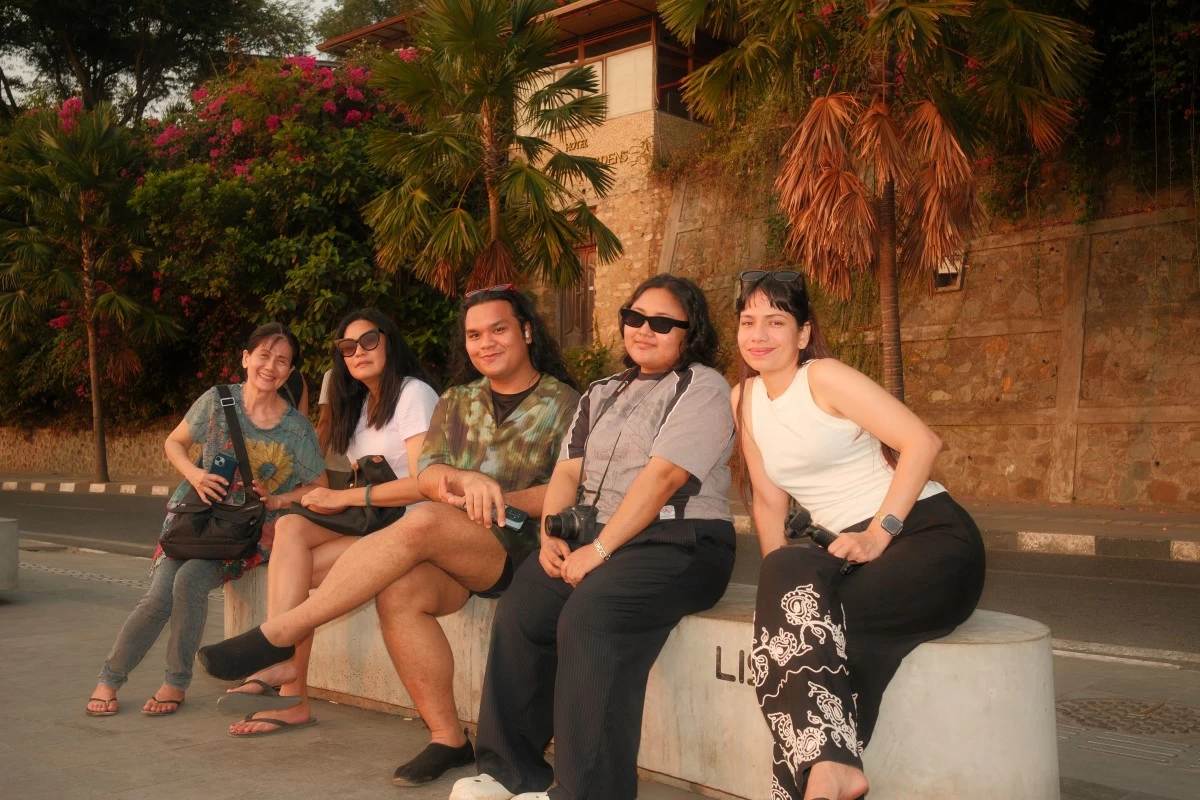 The author (in green) with fellow media practitioners enjoying the sunset at Photo Spot Labuan Bajo. (Photos: John Legaspi/Manila Bulletin)
As for this author, the best spot to witness the setting sun is Photo Spot Labuan Bajo. Not only does it offer sweeping views of the coastal town and the sea, but this roadside spot also requires no hiking or trekking to reach. Its simple setup and accessible location make it a favorite among locals and tourists alike. The seats offer a place to settle in, take in the scenery, and watch as the sky slowly transforms.
*****
Credit belongs to: www.mb.com.ph


